Symptoms, Diagnosis & Relapse Risks of All Types of FIP
2025-09-27
Symptoms, Diagnosis & Relapse Risks of All Types of FIP
According to clinical manifestations, FIP is classified into wet FIP, dry FIP, ocular FIP and neurological FIP. Different types have distinct symptoms and risks.
It has an acute onset and typical symptoms: lethargy, loss of appetite, weight loss, persistent fever that cannot be relieved by antibiotics, anemia, jaundice and stunted growth.
• Abdominal effusion: The cat’s abdomen swells obviously.
• Thoracic effusion: Difficulty breathing.
Less than 10% of wet FIP cases are combined with ocular or neurological lesions. Severe anemia (hematocrit below 15%) is a life-threatening emergency.
No obvious body fluid accumulation. Lesions form in kidneys, spleen, liver, intestinal tract, lungs and heart. Dry FIP has a higher probability of combining with ocular and neurological problems, accounting for 60% of all dry FIP cases.
• Ocular FIP: Eye cloudiness, iris discoloration, uveitis, retinal hemorrhage and detachment, involuntary eye movement.
• Neurological FIP: Limb weakness, unsteady gait, head tilt, unequal pupil size, tremors, convulsions, incontinence, behavioral abnormalities and skin hyperesthesia.
FIP is the leading cause of inflammatory eye and nervous system diseases in cats aged under 3–5 years old. It can be distinguished from toxoplasmosis, fungal infection and lymphoma by living environment, age, blood routine, biochemical indicators and cerebrospinal fluid test results. The rapid improvement after using GS-441524 is also an important diagnostic basis.
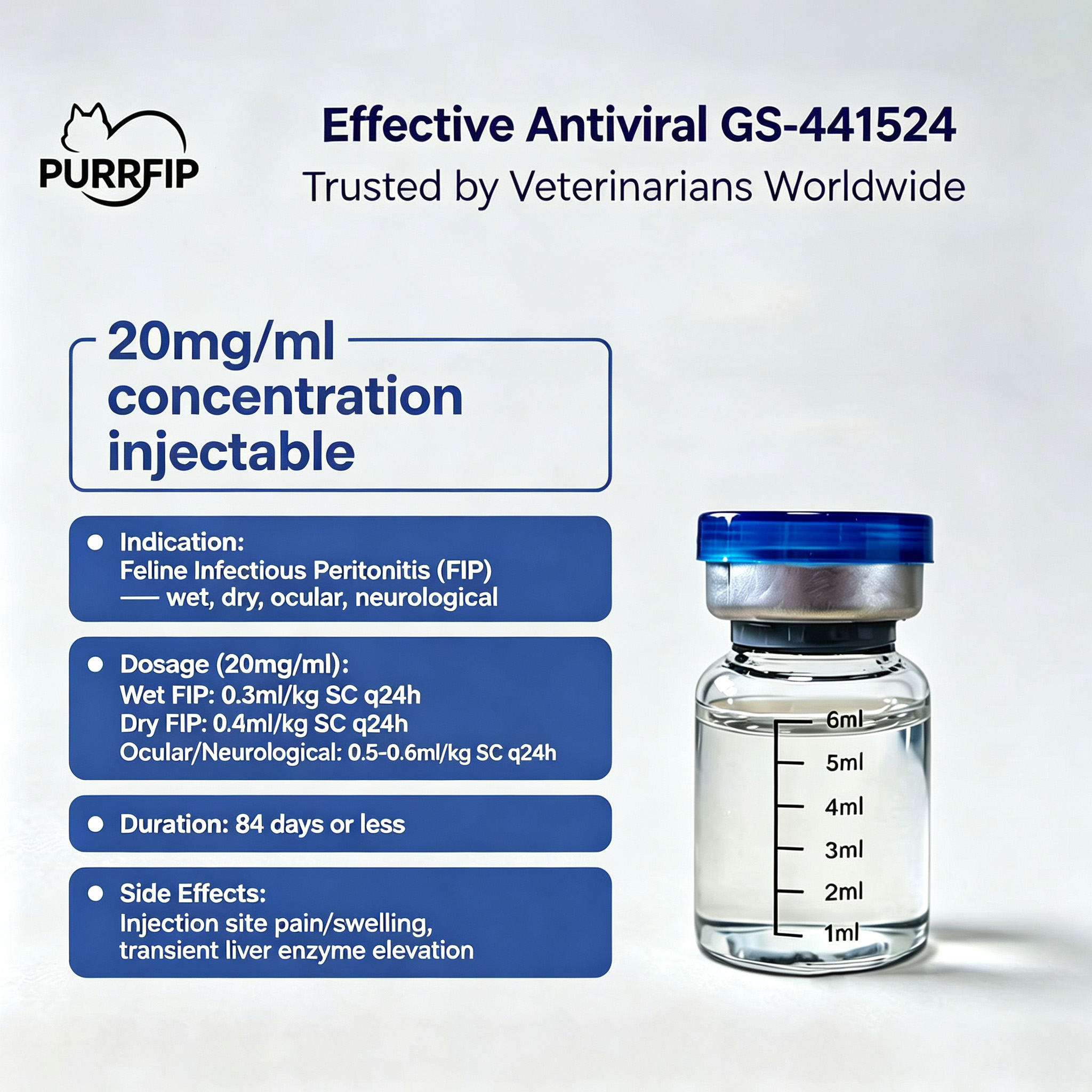
Neurological and ocular FIP have the highest relapse rate. The disease may recur within days to weeks after stopping medication, so the medication cycle must not be shortened arbitrarily. Under-dosing will also greatly increase the risk of drug resistance and relapse.